
Let’s start with a huge thank you to Mary Breiner, who has served as the chair of the Chevra Kadisha for many, many years. Unknown to most, she has worked behind the scenes, ever so sensitively, to assist congregants in time of loss. Mary has been the one to go to for all four of the responsibilities of the chevrah: taharh, shmirah, gemilut chesed and nechamah. These four areas of responsibility were developed in the early 1990’s when Netivot Shalom first created a chevrah kadishah. Our tradition suggests that when a congregation was established, one of the first acts was to purchase land for a cemetery and establish a chevrah kadishah. It was the responsibility of the community to provide for these essential services.
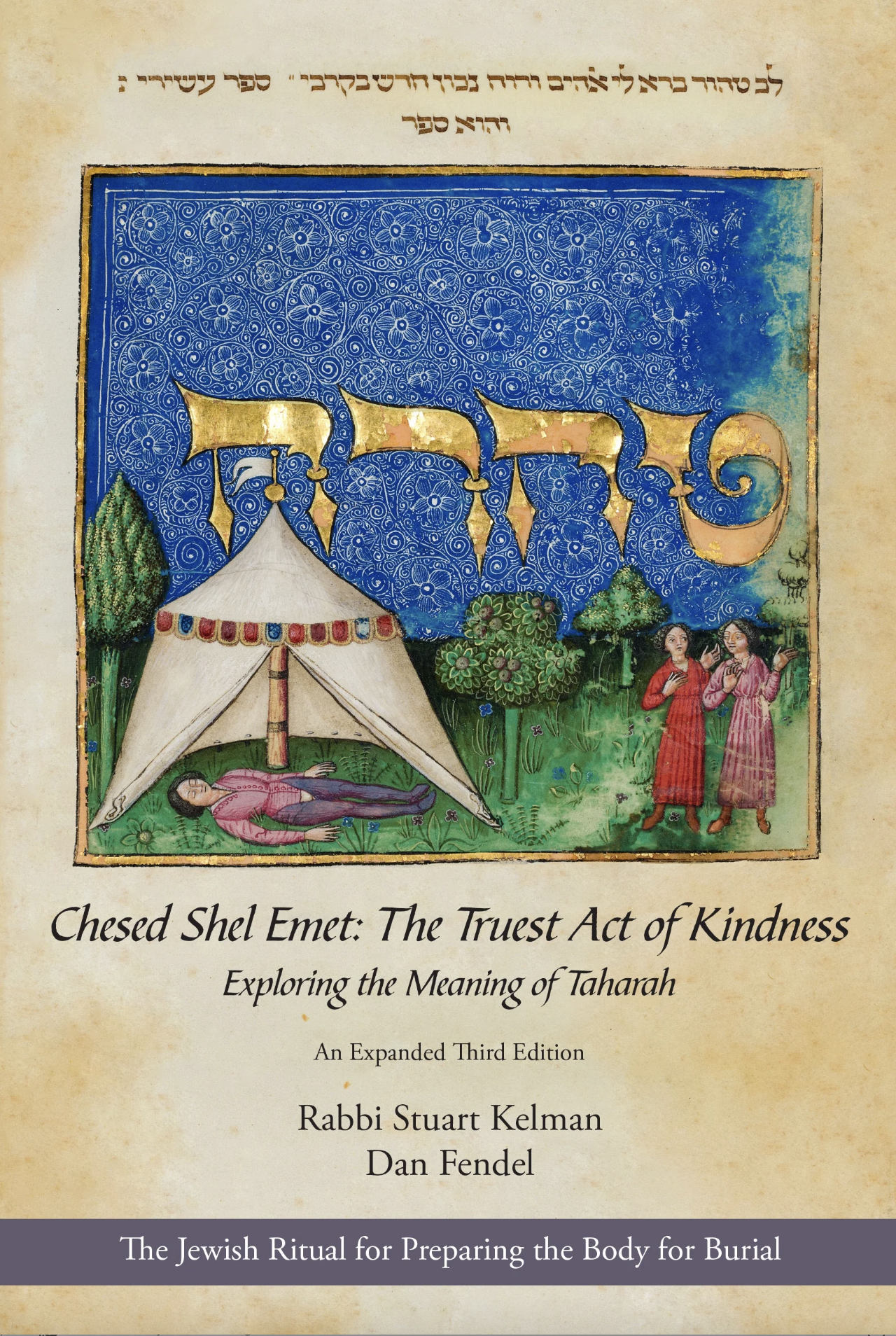
Under the leadership of Celia Concus (our first President of the Board), we held a first meeting at the JCC where we described what the function of a chevrah would be. More than 50 people attended, so we knew that our community was ready to begin work. Through sermons and study, we determined that there would be four responsibilities of the chevrah. But we knew very little about just how to prepare a body, so we trained with the long established chevrah at Cong. Beth Jacob until we felt we were prepared to begin the practice at Netivot Shalom. Two teams were established–one for men and one for women. We needed a booklet describing the practice of taharah. We used a well-xeroxed version of a traditional guide. Through the good efforts of Claudia Valas at EKS Publishing, we successfully created our new manual: Chesed Shel Emet: The Truest Act of Kindness: Exploring the Meaning of Taharah. This was the first time that a manual was published that contained Hebrew and English translation and transliteration as well as being gender sensitive. (Years later, we published an expanded third edition, in which we undertook to explore the reasons behind each step of taharah). A second function of the chevrah was to provide for shmirah – staying with the body from the time of death to the funeral. We set up teams of people to sit with the body but only from the time of taharah to the funeral. (Later, the function of shmirah would be modified to include virtual shmirah providing an opportunity for people who were not able to be present in-person to participate). The third function, gemilut chesed the scope of which is hard to define. Some examples: providing the seudat havra’ah, the meal of condolence after the funeral; bringing food for days to follow; preparing for a shloshim (thirty days after a death); bringing siddurim to the house of mourning during shiva; making sure there would be a minyan. A fourth function, nechamah, was to provide support and comfort once shiva concludes. The nechamah volunteer would approach the mourner to discuss how they might be helpful on behalf of the congregation.
We also assembled sources that might be useful in the journey of the mourner. Naturally, bikkur cholim, visiting the sick, was part of the tasks of the chevrah as well. And it was Alison Jordan who helped articulate just how these values worked. Over the years, many of you have participated in one way or another in the activities of the chevrah. A profound thank you. During the last two years, Lynne Yellenberg and Becki Wolf-Prusan helped chair the chevrah.
In closing, Mary found within herself the courage and sensitivity to provide all these functions. So again, thank you Mary and welcome Yossi Fendel and Ellen Reier as the new co-chairs of the chevrah. You will be hearing from them shortly.